A 3PL usually signs with its client first and finds the building second. The client contract runs for a set number of years, with a renewal the client may or may not take up. The warehouse lease runs on its own clock, with its own lock-in, notice period and exit terms. When the two clocks do not line up, the 3PL carries the gap: rent on a building its client no longer needs.
This guide is for 3PLs, dedicated and multi-client, taking 1,00,000 sq ft or more near Bangalore, and for the e-commerce, FMCG and retail companies that hire them. It covers how long to lease for and on what terms. Where to lease, corridor by corridor, is in our guide to large Grade A warehouses in Bangalore.
Why the lease term matters more for 3PLs now
3PLs are the largest takers of warehouse space in Bengaluru. Cushman & Wakefield's report for the first half of 2026 put the city's warehouse leasing at 3.1 million sq ft, up 78% on a year earlier, with 3PLs taking 58% of it (The Tribune, reporting ANI).
More 3PLs chasing the same large buildings means less time to negotiate. That is when lease terms get signed without anyone checking them against the contract they are meant to serve.
Start with the client contract, then the building
Before you look at a single building, pull five things out of the client contract:
Term and renewal. How many years, and whether renewal is automatic, by mutual consent or at the client's option.
Early exit. Whether the client can leave before the end, on how much notice, and whether it pays anything if it does.
Volume. The space needed on day one, and whether the contract expects that to grow or lets the client shrink it.
Site requirements. Anything the client insists on: clear height, number of docks, the grade of fire system, temperature control, or a location close to its own customers.
Fit-out. Who pays for racking, docks, power upgrades and IT, and who owns them at the end.
Each of these maps to a clause in the lease. You negotiate better when you know which ones the client contract has already fixed for you.
Dedicated site or multi-client site
A dedicated site serves one client, so the whole lease rests on that one contract. A multi-client site spreads the building across several clients, so losing one leaves you part of a building to fill rather than all of it.
For a dedicated site, judge the lease against that client's contract alone; the exit terms matter most. For a multi-client site, flexibility inside the building matters more: the right to sublet or partition, separate entries and docks, and power that can be split.
Some clients prefer to sign the lease themselves, or to stand behind the 3PL's lease. That moves the risk, and it is worth raising with the client before the landlord.
Ready Grade A or build to suit
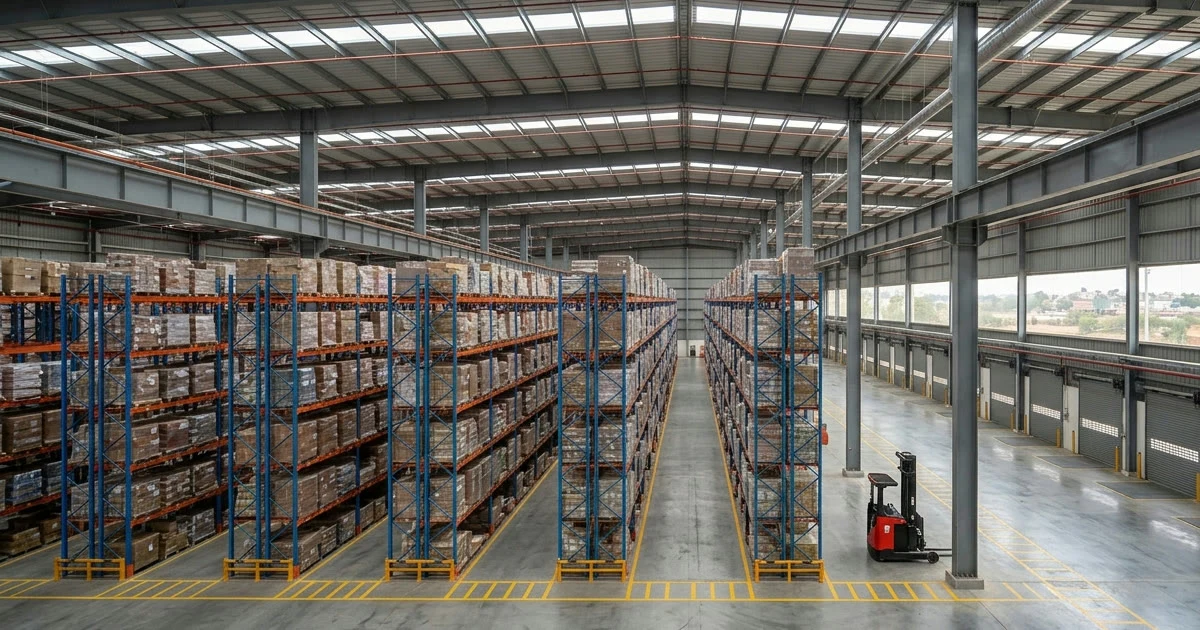
A ready Grade A building suits a 3PL whose client wants to start soon, or whose operation fits a standard warehouse. Large ready buildings are taken quickly, so start the search as soon as the client contract is close to signing.
Build to suit is a bigger commitment. A landlord puts up a building to your specification and leases it to you. A standard pre-engineered building takes about 4 to 8 months plus approvals, and the lease typically runs 9 to 12 years. It makes sense for a single client when that client commits for the long term, when the specification is unusual enough that no ready building fits, or when you are confident the building will serve other clients after the first contract ends.
The full trade-offs between the routes are in our comparison of ready sheds, build to suit and KIADB plots.
What to compare before you sign
Deposits, lock-ins and escalation vary from building to building and from landlord to landlord, and the figures published online disagree. So rather than lean on a range, put each offer next to your client contract and compare these points:
Lock-in. How long you cannot leave, and whether it ends before your client contract does.
Notice period. How much notice you must give after the lock-in, and whether that fits the notice your client must give you.
Security deposit. How many months of rent, when it comes back, and what can be deducted.
Rent escalation. The rate, how often it applies, and from which date.
Rent-free fit-out period. How long, and whether it covers the time your racking and docks take to install.
Assignment. Whether you can transfer the lease, for example to your client if it takes the operation in-house.
Subletting. Whether you may sublet part of the building, and, if the building stands on KIADB land, whether the landlord has or can get KIADB's written NOC.
Reinstatement. What you must remove or restore when you leave, and who keeps what you installed.
Renewal option. Whether you can extend on known terms if your client renews.
Stamp duty, registration and the KIADB subletting NOC are explained in our industrial leasing guide for Karnataka.
If your client leaves early
Contracts end early. A client is acquired, redraws its network or takes logistics in-house. The lease carries on unless it says otherwise, and your options are only as good as the clauses you agreed:
Bring in another client and run the site as multi-client, if the building and the lease allow it.
Sublet part or all of the space, with the landlord's consent and, on KIADB land, KIADB's NOC.
Assign the lease to your client or to a new occupier, if the lease permits it.
Leave after the lock-in, on the notice the lease sets.
The time to secure these is when the landlord wants your signature. Once the client has gone, you have nothing left to trade.
Where to look
Corridors for large 3PL sites are compared in our Grade A warehouse guide. Area by area, see Nelamangala and Dabaspet on the Tumakuru road, Hoskote to the east and Bommasandra to the south. Current rents by corridor are in our Bangalore industrial rental rate index, and buildings available now are in our warehouse listings.
Where our work starts and stops
Enosh Infra has been an industrial property consultancy in Bangalore since 2019, handling requirements from 10,000 to 400,000+ sq ft, and we have placed 3PLs in large warehouses around the city. Our part is the property: the search, the document checks, the negotiation of the terms above, and the coordination with the landlord. Our work ends at the signed lease, or, on build to suit, at the signed Agreement to Lease. The client contract, your licences and the fit-out stay with you and your advisers.
Signing a client contract that needs a large warehouse? Tell us the size, the start date, the contract term and your client's site requirements, and we will come back with buildings that fit. Tell us your requirement